Why Your GTM Team Hasn't Adopted Claude Code Yet
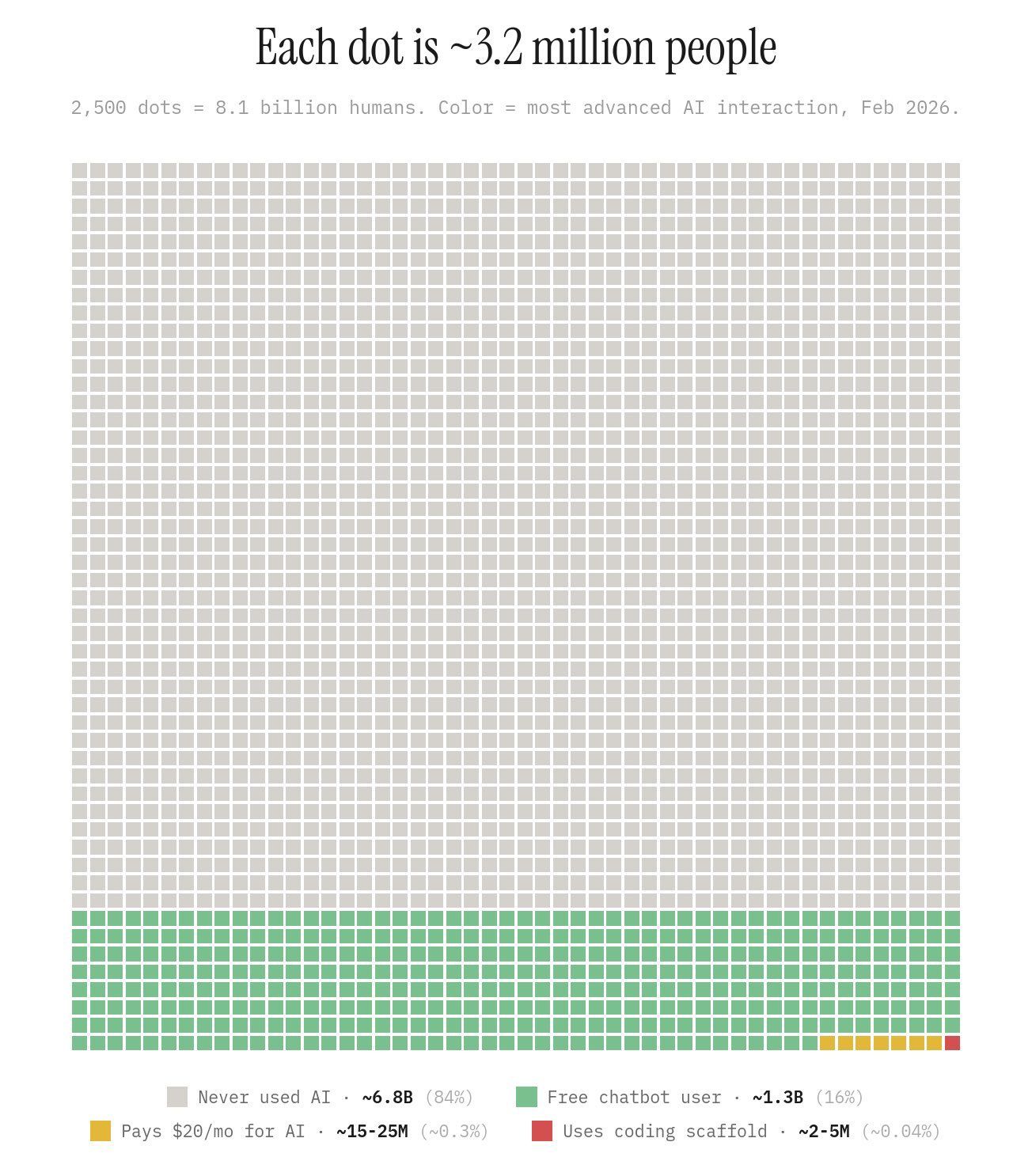
LinkedIn is a bubble. Every post in your feed makes it look like every GTM team is already running Claude Code, shipping agent workflows, and building custom pipelines in their terminal.
They’re not.
Every founder and GTM leader I’ve talked to since January has shared the same reasons they haven’t gotten started. The objections are consistent enough that I can list them. And none of them hold up.
”My team doesn’t need code”
This is the most common one. And it’s based on a misunderstanding of what your team actually does all day.
Your GTM team’s job is processing information and turning it into action. SDRs process prospect data into outreach. RevOps processes pipeline data into reports and routing rules. Marketing processes market signals into campaigns. Sales leadership processes deal data into forecasts and coaching.
All of it is information manipulation. Code is nearly always the most efficient way to do it.
I’m not saying your AEs need to learn Python. I’m saying that when an SDR spends 45 minutes manually researching 9 prospects at 5 minutes each, a script can pull richer data on 500 prospects in the same time. When RevOps spends a day building a report by exporting CSVs from three tools and combining them in a spreadsheet, a script can do that in seconds and run automatically every morning.
Claude Code doesn’t require your team to write code. They type plain English. Claude writes the code, runs it, and gives them the output. The interface is a text box. The output is whatever they need — enriched lists, scored leads, drafted sequences, formatted reports.
You now have an engineering teammate doing this for your GTM org for $200 a month. The question isn’t whether your team needs code. It’s whether you can afford to keep doing information work manually when the alternative is this accessible.
”Claude Code uses local files but I need to connect to my team’s web tools”
This one comes from a reasonable place. Your CRM, your sending platform, your enrichment tools — they’re all web apps. If Claude Code only works with local files, what’s the point?
But Claude Code connects to anything via MCP or API. Your CRM has an API. Your database has an API. Your sending platform, your enrichment tools, your analytics — anything with an endpoint, Claude Code can talk to.
MCP (Model Context Protocol) lets you connect Claude Code to external services as a native integration. We use it for tools like Fathom to pull call transcripts directly into our project context. For tools with clean APIs — which is most of them — Claude Code writes the API calls for you. You say “pull all deals that closed in Q4 from HubSpot” and it handles the authentication, the API call, the data parsing, and returns the result.
And your local files come online too. Everything in your Claude Code project is version-controlled via git. Your team can share context, skills, and scripts the same way engineering teams share code. Your CLAUDE.md file, your skills, your enrichment scripts — they’re all collaborative and portable.
The “local files” framing makes it sound limited. In practice, Claude Code is more connected than most of the SaaS tools your team already uses because it can talk to all of them.
”It will take me too long to learn how to use terminal”
This objection sounds reasonable until you actually try it.
Opening a terminal, navigating to a folder, and typing a sentence takes less than an hour to get comfortable with. That’s it. There’s no programming to learn. There’s no syntax to memorize. You open the application, you navigate to your project folder, and you type what you want in plain English.
If you can use Slack, you can use Claude Code. The interface is a text box where you type messages and get responses. The difference is that the responses can include running scripts, generating files, pulling data from APIs, and producing actual deliverables — not just text in a chat window.
The real barrier isn’t technical difficulty. It’s unfamiliarity. Terminal looks intimidating because most GTM professionals have never had a reason to open one. But the actual interaction model is simpler than most of the SaaS tools your team uses daily. There are no dashboards to navigate, no settings menus to configure, no drag-and-drop builders to figure out. You type what you want. It does it.
I’ve seen marketing managers, SDR leaders, and founders with zero technical background get productive in Claude Code within their first session. The learning curve is measured in minutes, not weeks.
”I already use Cowork”
Cowork is a good product. It can execute tasks on its own, and that’s genuinely useful. But Cowork and Claude Code are solving fundamentally different problems.
Cowork is like a capable freelancer. You give it a task, it does the task, it gives you the result. Each task is independent. You describe what you want, it executes, you move on. That works well for one-off requests.
Claude Code is building a system. Every session compounds on the last one. Your project has a CLAUDE.md file that contains your ICP, your methodology, your offers, your positioning. You have skills that encode how you do specific tasks — how you write outbound copy, how you score leads, how you build lists. You have context files with campaign history, call transcripts, enrichment results.
When you ask Claude Code to write outbound emails for a new segment, it’s not starting from scratch. It’s referencing your best-performing copy, your ICP definition, the signals that have historically correlated with replies, and the voice guidelines you’ve established. Campaign 5 is better than campaign 1 because it has four campaigns of accumulated learning.
Cowork will do a great job on the task you describe. But it won’t remember that task next week. It won’t cross-reference it with other tasks. It won’t build a compounding knowledge base that makes every future task better.
The difference is: Cowork runs tasks. Claude Code builds the machine.
The Real Barrier
None of these objections are really about the technology. They’re about organizational inertia. Learning something new takes effort, and it’s easier to keep doing things the way you’ve always done them.
But the teams that adopt Claude Code now are building compound advantages that get harder to catch every month. Their context gets richer. Their skills get more refined. Their pipelines get more capable. And the gap between them and teams still doing manual GTM work keeps growing.
The best time to start was January. The second best time is today. The onboarding cost is an hour. The monthly cost is $200. The opportunity cost of waiting is the compound learning you’re not building.